Top 12 Fintech Trends for 2026 (and What’s Coming in 2027)
this is the testing blog be sure!!

Krunal Mistry
Web developer
07 Sept 2026 • 2 min read
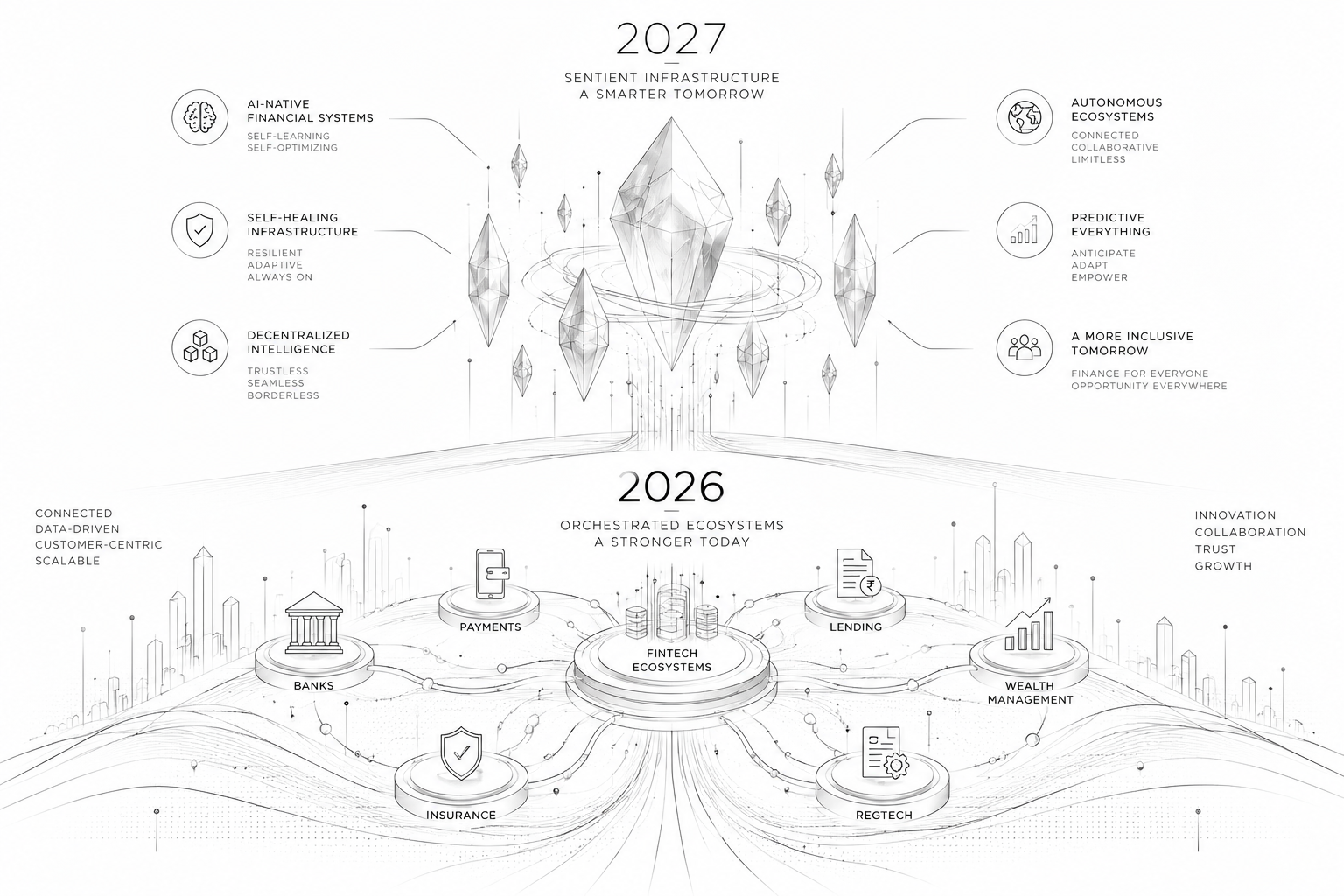
The Pillar Trends Defining 2026
To understand how these pillar trends translate into market realities, we must look at the specific catalysts reshaping the industry.
Hyper-personalized financial orchestration now utilizes real-time behavioral data to adjust credit and investment portfolios on the fly, moving away from static banking products.
Embedded financial ecosystems have reached a tipping point where banking services are no longer standalone apps but integral components of social, retail, and productivity software.
Autonomous liquidity management uses decentralized protocols to optimize capital allocation for both individuals and enterprises, drastically reducing the latency of traditional clearinghouses.
By integrating these developments, the industry is transitioning from a reactive model to a proactive, state-aware architecture, ensuring that capital efficiency becomes an automated standard rather than a manual goal.
The 2027 Horizon: Disruptive Innovations on the Brink
| Innovation Category | Key Development Expected in 2027 | Impact Level |
|---|---|---|
| Quantum Cryptography | Post-quantum encryption standards for secure banking | High |
| Autonomous DeFi Agents | AI-led cross-protocol liquidity management | Medium |
| RegTech Sovereignty | Real-time, automated cross-border regulatory compliance | High |
| Biometric Identity Wallets | Decentralized, non-custodial persistent digital identity | Medium |

As we move beyond the foundational shifts of 2026, the 2027 horizon marks the transition from mere digitization to the era of sentient financial infrastructure. By 2027, the focus will pivot toward self-healing ledger systems, fully autonomous sovereign identity frameworks, and the integration of quantum-resistant encryption at the retail banking layer. While 2026 was defined by the orchestration of existing data, 2027 will be characterized by generative financial agents that negotiate and execute complex cross-border settlements without human mediation, effectively turning legacy banking rails into background utilities. The following table maps the most critical innovations set to mature during this next phase, highlighting the shifts that will move from experimental pilots to industry-standard mandates.
Conclusion
The leap from 2026’s sophisticated orchestration to the sentient infrastructure of 2027 signals a fundamental shift in the social contract between financial institutions and their users. As autonomous, self-healing systems replace manual oversight, success will no longer be measured by mere digital agility, but by the ability to embed trust into the architectural code itself. Leaders who prioritize these advancements—moving from passive monitoring to proactive, sovereign financial health—will define the next era of value. The race to 2027 is not just about keeping pace with technological velocity; it is about building a resilient, intelligent framework that transforms finance from a utility into an invisible, intuitive partner in the modern economy.